ORTHOPAEDIC SURGEON
SHOULDER CARE
Arthritis
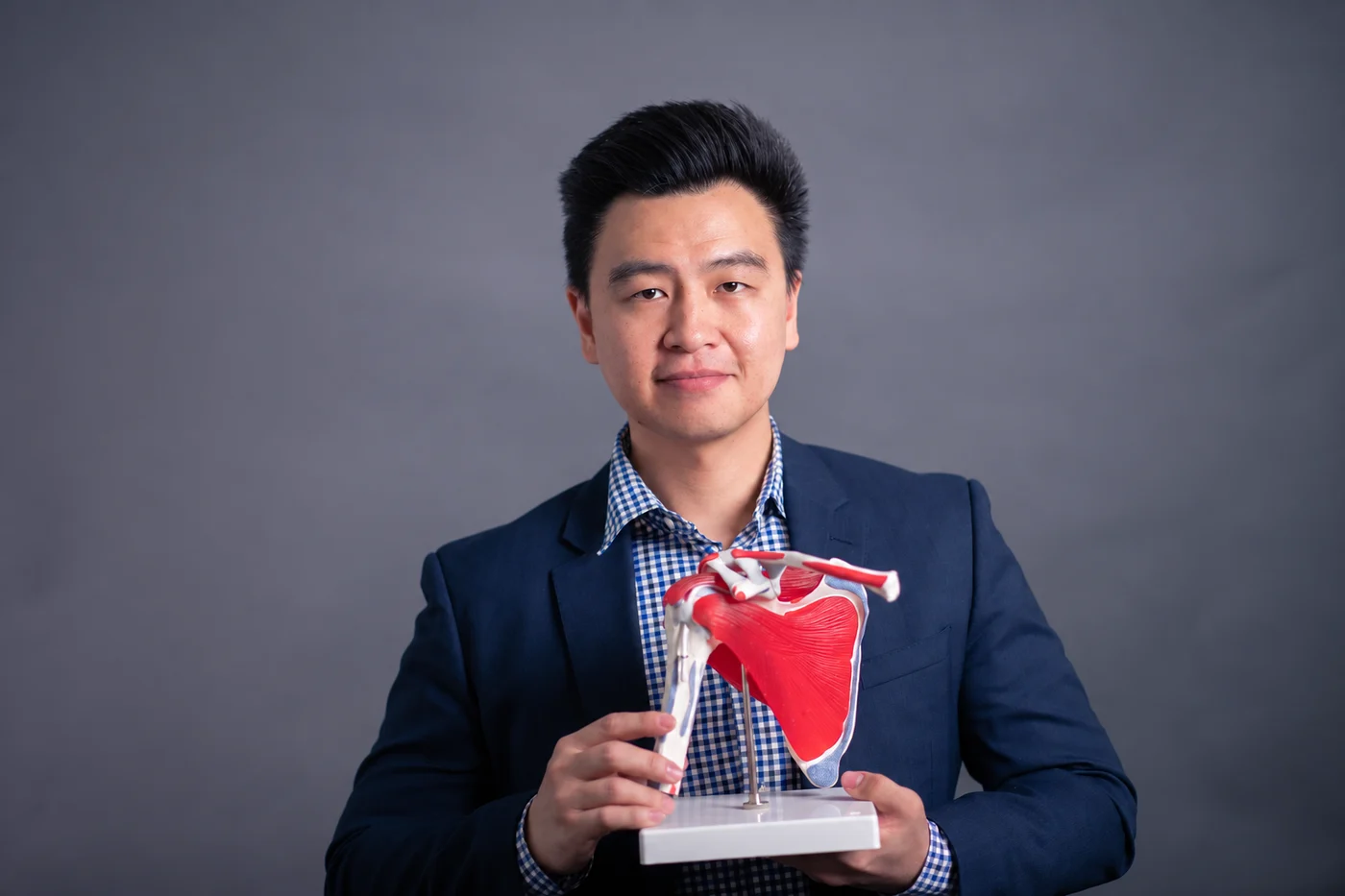
Shoulder arthritis can cause pain and stiffness that interfere with sleep and everyday activities. Treatment is based on your symptoms, the condition of the joint and what you want to get back to doing.
When non-surgical care is no longer providing enough relief, shoulder replacement may be considered. Dr Tu performs anatomic and reverse shoulder replacement, with patient-specific planning. The choice depends on the joint, the rotator cuff and your needs.
An anatomic replacement follows the shoulder’s natural ball-and-socket arrangement. A reverse replacement changes that arrangement so the deltoid muscle can help compensate for a damaged rotator cuff. Rehabilitation is tailored to the procedure.
Patient guides & recovery
Anatomic shoulder replacement: patient guidePDF ↗Reverse shoulder replacement: patient guidePDF ↗Patient-specific planningPDF ↗Anatomic replacement: postoperative protocolPDF ↗Reverse replacement: postoperative protocolPDF ↗Watch Dr Tu’s shoulder replacement video →
Planning your recovery
Risks vary by procedure and can include infection, nerve injury and anaesthetic complications. Outcomes and recovery times differ between patients.
Use the protocol specified by Dr Tu for your procedure. Your individual instructions take priority; contact the rooms if you are unsure which document applies.
Dr Tu will discuss the benefits, risks and recovery appropriate to your circumstances.