ORTHOPAEDIC SURGEON
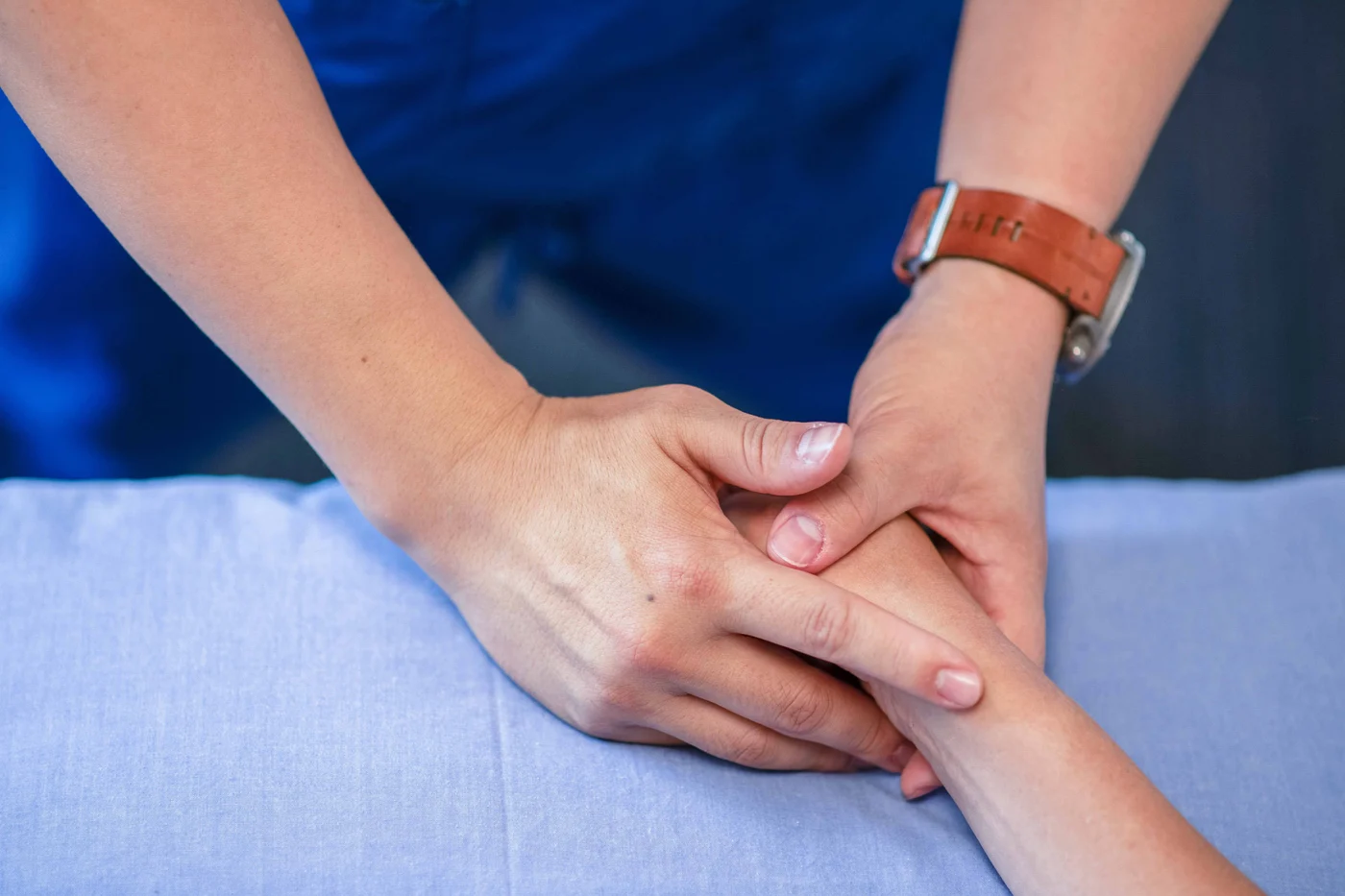
When everyday tasks become painful
Arthritis at the base of the thumb can make opening jars, turning keys and writing uncomfortable. It affects the carpometacarpal (CMC) joint, where the thumb meets the wrist. As cartilage wears away, the joint may become painful, stiff and weaker during pinch or grip.
What is thumb joint replacement?
Thumb CMC joint replacement replaces the worn joint surfaces with a prosthetic implant. Dr Chen Tu uses the Elis thumb replacement system. The aim is to reduce pain while preserving thumb movement and improving hand function.
Dr Tu assesses your symptoms, examines your hand and reviews imaging before recommending treatment. The choice depends on the joints affected, bone quality, your activities and your goals.
Is joint replacement right for you?
Replacement may be an option when painful thumb base arthritis continues to limit daily life despite non-surgical treatment. It is not suitable for every thumb. Dr Tu will explain whether an implant or another approach is more appropriate for your circumstances.
Options before surgery include modifying painful activities, a supportive splint, hand therapy, appropriate pain relief and sometimes a corticosteroid injection. A common surgical alternative is trapeziectomy, which removes the small trapezium bone at the base of the thumb, sometimes with a supporting reconstruction.
The operation and its risks
The procedure is usually performed as day surgery. Dr Tu will discuss your anaesthetic, the implant and the plan for protecting your hand afterwards.
Possible risks include infection, nerve irritation or injury, persistent pain, stiffness and complex regional pain syndrome. An implant can dislocate, loosen or wear, and further surgery may be needed. The benefits and risks of replacement and alternative operations will be discussed before you decide.
Recovery, with hand therapy
Early recovery balances protecting the implant with gentle movement. Your dressing and splint support healing, and a hand therapist helps you regain motion and gradually build strength.
In Dr Tu’s usual protocol, the first review is around 7–14 days, with a removable thumb splint and guided exercises. Splint use is typically reduced from around four weeks if the wound has healed and the thumb is comfortable. Loading increases gradually; heavier activities are generally introduced around six to eight weeks as advised. Strength and endurance can continue improving for several months.
Return to driving and work depends on safe hand control, comfort and the demands of the activity. Follow your individual instructions rather than a fixed date.
Patient information and recovery protocol
Thumb CMC joint replacement: patient guidePDF ↗ Thumb CMC joint replacement: recovery protocolPDF ↗ Alternative surgery: trapeziectomy and suspensoplastyPDF ↗Further reading: British Society for Surgery of the Hand: basal thumb arthritis.
This information is general. Dr Tu will discuss the treatment, risks and recovery appropriate to your individual circumstances.
Explore endoscopic carpal tunnel release or shoulder surgery.